 Save
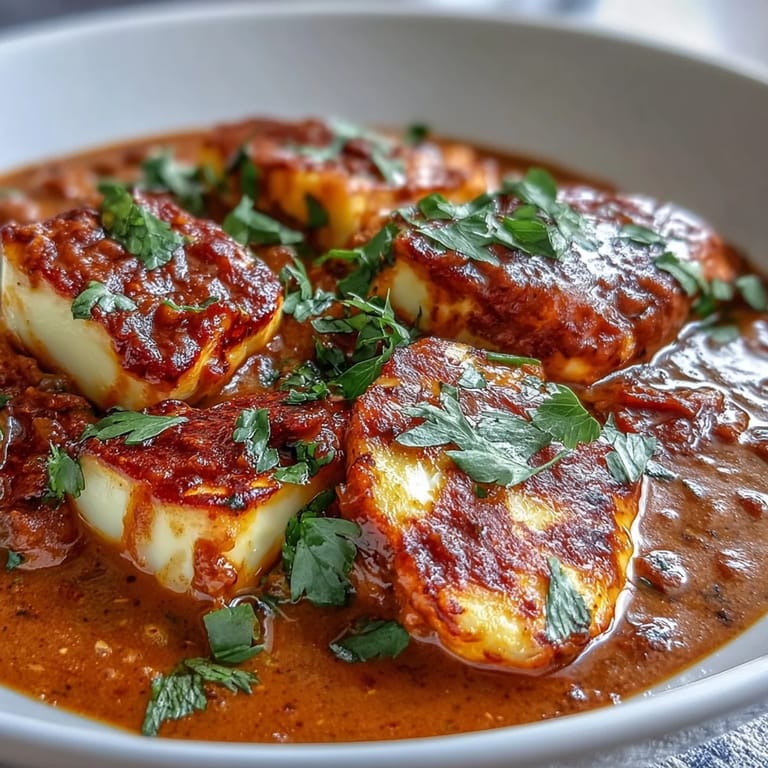
Save My daughter came home from school asking why curry had to be complicated, and that single question led me to this halloumi curry on a random Tuesday evening. I'd been intimidated by spice blends for years, thinking every curry needed hours of simmering and ingredients I couldn't pronounce. But halloumi, with its high melting point and squeaky bite, turned out to be the perfect gateway into making curries feel less like an ordeal and more like something I could actually pull off on a weeknight. The way it holds its shape in the creamy sauce while soaking up all those warm spices felt like a small victory in the kitchen.
I made this for my sister-in-law's family on a Sunday, and watching her toddler happily eating curry without any fuss was honestly better than any cookbook review could ever be. There's something about creamy coconut sauce that makes even the pickiest eaters curious, and the golden halloumi chunks are almost fun to eat when you're young. That afternoon shifted my whole perspective on what family-friendly cooking could actually mean.
Ingredients
- Halloumi cheese, 400 g cut into 2 cm cubes: This is your star player because it won't melt into the sauce the way regular cheese would, keeping its texture and giving you those delightful squeaks as you bite into it.
- Medium onion, finely chopped: The foundation of flavor that sweetens as it caramelizes, creating the base for everything else.
- Garlic, 2 cloves minced: Just enough to perfume the sauce without overpowering it, especially important since we're keeping this mild.
- Fresh ginger, 2 cm piece grated: This brings a subtle warmth and brightness that balances the richness of the coconut milk beautifully.
- Red bell pepper, 1 diced: Adds sweetness, color, and a slight textural contrast while cooking down into the sauce.
- Canned chopped tomatoes, 400 g: Use canned for consistency since fresh tomatoes can be unpredictable, and the acidity helps cut through the cream.
- Garam masala, 1 tbsp: The soul of the curry, this spice blend is what makes it feel authentic without requiring you to source ten different things.
- Ground cumin, 1 tsp: Adds an earthy warmth that complements the tomato beautifully.
- Ground coriander, 1 tsp: A subtle sweetness that makes people ask what that mysterious flavor is.
- Turmeric, ½ tsp: Golden color and mild earthiness, plus the health benefits everyone's always talking about.
- Chili powder, ½ tsp adjusted to taste: Keep it mild here so you're not scaring off anyone at the table, but you can always sprinkle more in your own bowl.
- Paprika, ½ tsp: A slight smoky note that adds complexity without heat.
- Salt and black pepper, to taste: Season at the end when you can actually taste what you've made, not before.
- Coconut milk full fat, 200 ml: Full fat is non-negotiable here because the richness is what makes this feel like a restaurant curry and not just tomato sauce with cheese.
- Tomato paste, 2 tbsp: A concentrated hit of tomato flavor that deepens as it cooks in the spices.
- Vegetable oil, 1 tbsp: For getting the halloumi golden and fragrant before everything else comes together.
- Fresh cilantro leaves, chopped: This is not optional because it brings freshness to a dish that could otherwise feel heavy.
- Lemon wedges: The squeeze of acid at the end is what makes people say they can't quite figure out what makes it taste so good.
Tired of Takeout? 🥡
Get 10 meals you can make faster than delivery arrives. Seriously.
One email. No spam. Unsubscribe anytime.
Instructions
- Get the halloumi golden:
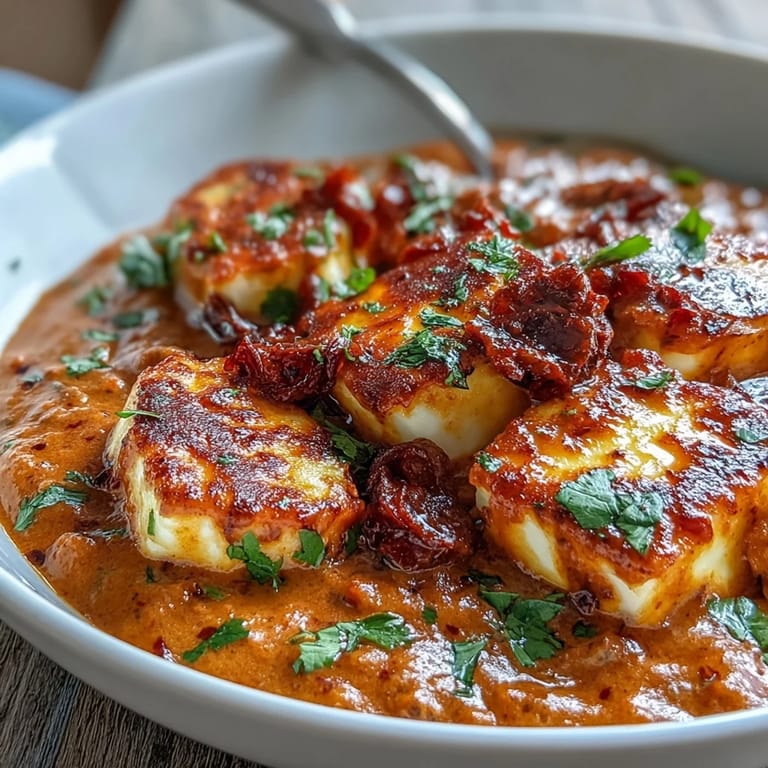
- Heat your oil over medium-high heat until it's shimmering, then add those halloumi cubes and listen for the sizzle. You want 2 to 3 minutes per side until they're burnished and golden, which seals in their structure before the sauce ever touches them.
- Build your aromatics:
- Lower the heat to medium, add your onion to that same pan with all its browned bits, and give it 3 to 4 minutes until it's soft and turning translucent. This is where the foundation of flavor happens, so don't rush it.
- Wake up the spices:
- Stir in your garlic, ginger, and bell pepper, cooking for another 2 to 3 minutes until the kitchen smells like something important is happening. You'll know it's right when the raw edge is gone from the garlic and the ginger releases that warm, peppery aroma.
- Toast your spice blend:
- Add your tomato paste and all those spices at once, stirring constantly for about 1 minute so they bloom and deepen in color. This is the moment where raw spices transform into something complex and inviting.
- Build the sauce:
- Pour in your tomatoes and coconut milk, stirring until everything is combined and smooth. Season with salt and pepper, then let it simmer for 8 to 10 minutes, stirring occasionally, until the sauce thickens and the flavors marry together.
- Bring the halloumi home:
- Gently return your golden halloumi cubes to the pan and let them sit in the simmering sauce for 5 minutes so they absorb all those curry flavors while staying firm and satisfying. This is the moment where everything clicks into place.
- Final taste and serve:
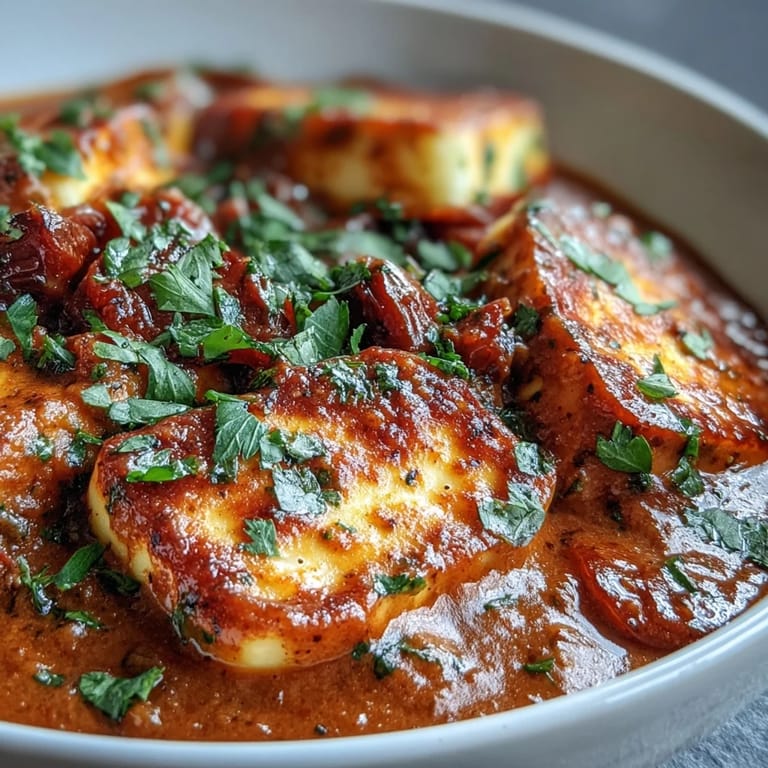
- Taste and adjust your salt, pepper, or even a pinch more chili powder if you want more heat. Garnish with cilantro and serve with lemon wedges so people can brighten it up however they like.
 Save
Save The real magic happened when my partner tried this on his first night working from home, and he kept coming back to taste it every time he walked past the stove. By the time we ate, he said it reminded him of a curry house down the street but felt somehow more comforting because we'd made it ourselves.
What Makes This Different From Traditional Curry
Traditional paneer curries can sometimes feel heavy or one-note if the spices aren't balanced just right, but halloumi brings this unexpected textural element that keeps things interesting. The cheese doesn't disappear into the sauce like paneer sometimes does, instead it stays present and squeaky, almost playful. It's like having a familiar comfort food that somehow still surprises you with every bite.
Why the Mild Spice Level Works
There's this assumption that curry has to be challenging or heat-forward, but this one proves that rich flavors and warmth can come from complexity rather than just chili powder. The garam masala, cumin, and coriander create depth that keeps your palate engaged without making anyone uncomfortable. It's entirely possible to make something feel sophisticated and restaurant-quality without requiring anyone to reach for water midway through dinner.
How to Make It Your Own
The structure here is solid enough that you can actually play around without everything falling apart, which is honestly the mark of a good recipe. Some nights I add extra ginger if I'm feeling under the weather, other times I throw in a handful of spinach in the last minute because it feels right. The lemon wedges are your safety net because a squeeze of citrus can adjust almost anything you've done.
- For more heat, add a chopped green chili with the aromatics or a pinch of cayenne pepper at the end.
- If you want it lighter, use light coconut milk and reduce the oil slightly without sacrificing flavor.
- Paneer works beautifully here too if you want to swap it out, though you'll lose that squeaky texture and gain a softer, more crumbly bite.
 Save
Save This curry has become the recipe I make when I want to prove that cooking doesn't have to be complicated to be delicious. It's the one I reach for when weeknights feel hectic or when I want to cook something that actually makes people happy.
Recipe FAQ
- → Can I substitute paneer for halloumi?
Yes, paneer works wonderfully as a substitute and provides a more traditional Indian flavor. Use the same quantity and frying method, though paneer may be slightly more delicate than halloumi.
- → How can I make this curry spicier?
Add a chopped green chili with the aromatics, increase the chili powder to 1 teaspoon, or stir in red pepper flakes to taste. You can also serve with hot sauce on the side for individual heat preferences.
- → Can I use light coconut milk instead of full-fat?
Light coconut milk works for a lower-calorie version, though the sauce will be less creamy and rich. For best results, use full-fat coconut milk to achieve the signature silky texture.
- → What should I serve with this curry?
Steamed basmati rice is traditional and soaks up the creamy sauce beautifully. Warm naan bread, roti, or cauliflower rice for a low-carb option also pair wonderfully with this dish.
- → How do I store and reheat leftovers?
Store in an airtight container in the refrigerator for up to 3 days. Reheat gently on the stovetop over low heat, adding a splash of coconut milk or water if the sauce has thickened too much.
- → Why do I need to fry the halloumi separately first?
Frying halloumi first creates a golden crust that adds texture and prevents the cheese from becoming too soft when simmered in the sauce. This step ensures the halloumi maintains its satisfying bite.