 Save
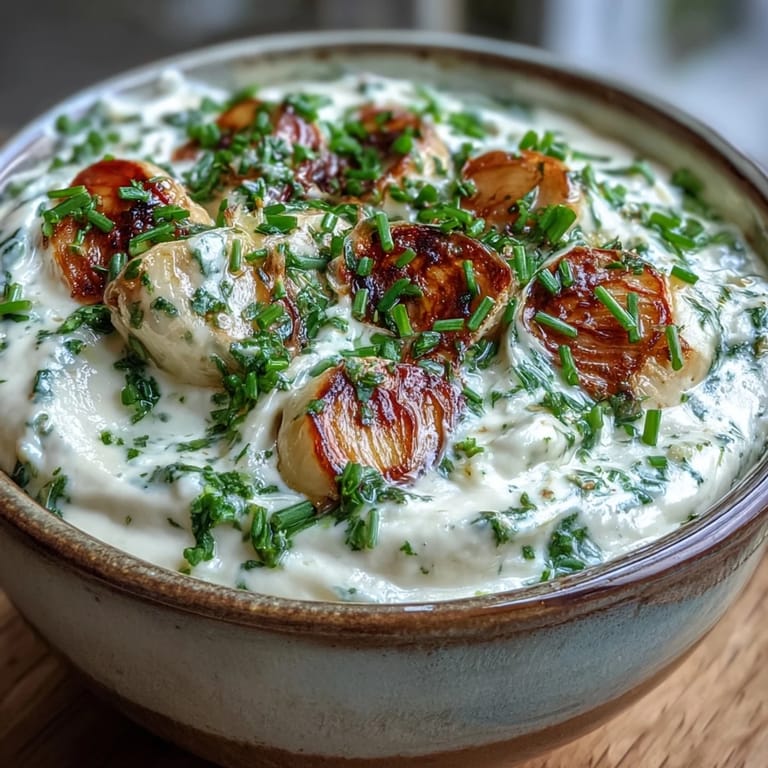
Save My neighbor handed me a bulb of roasted garlic one autumn afternoon, still warm from her oven, and I was struck by how the cloves had transformed into something almost sweet and spreadable. That evening, I found myself wondering what would happen if I built an entire soup around that golden, mellowed flavor instead of using raw garlic's sharp bite. The result was this velvety creation that somehow tastes both elegant and deeply comforting, the kind of soup that makes your kitchen smell like a French bistro without any fuss.
I made this soup the night my sister announced she was moving away, and we sat at my kitchen table with oversized bowls, trading memories between spoonfuls. She said the smell alone was making her emotional, which made me laugh because she'd never been sentimental about food before that moment. Sometimes a really good soup becomes the thing people remember from a difficult evening, not because it solved anything, but because it made the moment feel a little gentler.
Ingredients
- Garlic heads (3 whole): The star that deserves respect—roasting them until their edges turn golden brown is what gives this soup its signature sweetness and depth that raw garlic could never achieve.
- Yellow onion (1 large, chopped): Your aromatic base that becomes almost imperceptible once blended, but without it the soup tastes flat and one-dimensional.
- Yukon Gold potatoes (2 medium, peeled and diced): These waxy potatoes hold their shape while cooking and add natural creaminess when pureed, far better than starchy russets that turn mushy.
- Celery and carrot (2 stalks and 1 medium): The classic mirepoix foundation that builds flavor layers—don't skip them even though they disappear into the blend.
- Fresh thyme (2 tbsp or 2 tsp dried): Thyme's slightly earthy, floral notes complement roasted garlic perfectly; dried works fine but fresh has a brightness that elevates the final bowl.
- Fresh parsley (2 tbsp chopped): Added early in cooking, it becomes part of the soup's soul rather than just a garnish afterthought.
- Bay leaf, oregano, salt, and pepper: The seasoning backbone that keeps everything harmonious without stealing the show from the garlic.
- Vegetable broth (1.5 liters or 6 cups): Quality matters here since broth is nearly half the final volume—use homemade if you have it, otherwise reach for low-sodium so you can control saltiness.
- Olive oil and butter (2 tbsp each, butter optional): Olive oil adds its own subtle flavor while butter (if you choose it) brings a richness that makes the soup feel indulgent without heaviness.
- Chives or parsley for garnish: The finishing touch that adds color and a fresh herbal snap against the soup's velvety warmth.
Tired of Takeout? 🥡
Get 10 meals you can make faster than delivery arrives. Seriously.
One email. No spam. Unsubscribe anytime.
Instructions
- Roast the garlic until it's golden and surrendering:
- Preheat your oven to 400°F and slice the tops off your garlic heads—you'll see the cloves peeking through. Drizzle each one with olive oil, wrap them snugly in foil, and let them roast for 35 to 40 minutes until the exteriors are caramelized and the cloves inside are so soft they practically squeeze themselves out of their skins.
- Build your aromatic base:
- While garlic roasts, warm olive oil and butter in a large pot over medium heat, then add your chopped onion, celery, and carrot. Sauté them for 5 to 7 minutes, stirring occasionally, until they're softened and the kitchen smells like the beginning of something good.
- Combine everything and let it simmer:
- Once the garlic is cool enough to handle, squeeze those cloves right out of their papery skins into the pot with your vegetables. Add the diced potatoes, thyme, parsley, bay leaf, oregano, salt, and pepper, stirring everything together. Pour in your vegetable broth and bring the whole thing to a boil, then reduce the heat and let it simmer gently for about 20 minutes until the potatoes are completely tender.
- Blend until it's velvet:
- Fish out and discard the bay leaf, then using an immersion blender, puree the soup right in the pot with long, steady strokes until it's completely smooth and creamy. If you're using a countertop blender instead, work in batches and be careful with the heat—hot liquid and closed blender lids are not friends.
- Taste and adjust your seasoning:
- This step is non-negotiable because every broth tastes slightly different and your palate is your guide. Start with a small spoonful, let it cool just enough, and add more salt, pepper, or even a pinch of oregano if something feels missing.
- Ladle and serve with intention:
- Pour the soup into bowls, scatter fresh chives or parsley over the top, and serve immediately while it's still steaming. Crusty bread is optional but highly recommended for soaking up every last spoonful.
 Save
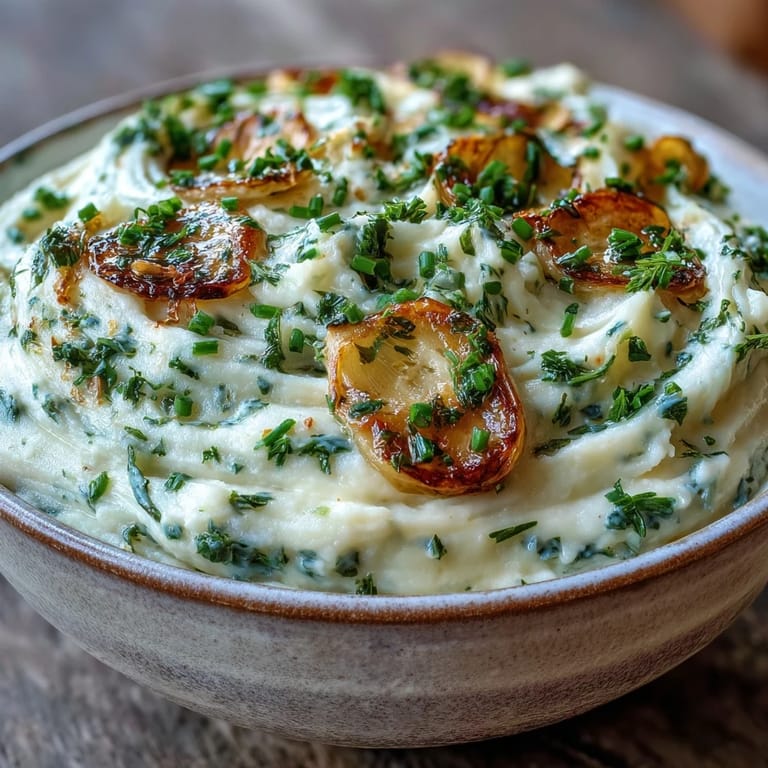
Save There's a moment when you first taste this soup where you can't quite identify what's making it taste so rich and complete, and then the roasted garlic hits you like a gentle revelation. That's the moment I knew I'd created something I'd be making forever.
Making It Your Own
This soup is forgiving in the best way, which means your kitchen becomes a laboratory for small experiments. I've added a splash of cream when I wanted something silkier, experimented with roasting garlic for 45 minutes instead of 40 to push the caramelization further, and once swapped half the vegetable broth for mushroom broth for earthiness. Each change taught me something about how these ingredients interact, and none of them ever resulted in failure—only variations on something delicious.
Serving Suggestions and Pairings
This soup shines as a starter before a simple roasted chicken dinner, or as the main event alongside crusty bread and a green salad when you want something that feels complete but still light. I've served it at casual weeknight dinners and at dinner parties where guests asked for the recipe, and it performs beautifully either way. The temperature flexibility is worth mentioning too—it's equally lovely hot from the pot or chilled the next day if you want something different.
Storage and Make-Ahead Magic
This soup actually improves after a day in the refrigerator as the flavors continue to meld and deepen, making it an excellent candidate for batch cooking. Store it in an airtight container for up to 4 days, or freeze it for up to 3 months in portions so you can thaw a single bowl's worth on a cold Tuesday without ceremony. You can even roast the garlic a day ahead and keep it wrapped in the refrigerator, which breaks up the cooking time beautifully if you're planning ahead.
- Reheat gently on the stovetop over medium-low heat, stirring occasionally and adding a splash of broth if it's thickened too much.
- Skip freezing the butter-enriched version if you want to avoid any separation issues, though honestly I've never noticed a problem.
- Always taste again after reheating because salt flavor can shift slightly, and you might want a tiny pinch more.
 Save
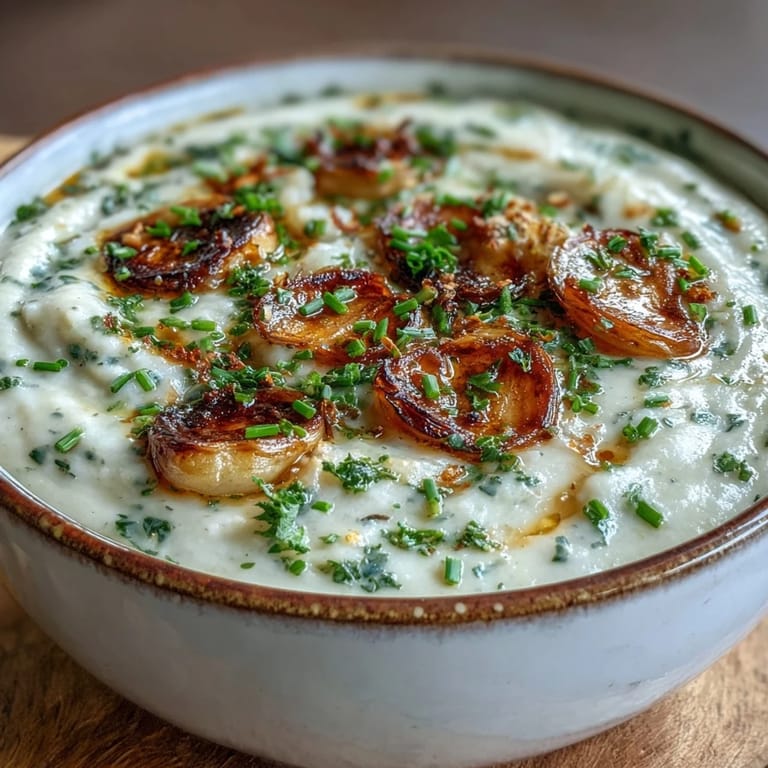
Save This roasted garlic and herb soup has become one of those recipes I turn to when I want to feel like I'm taking care of myself and anyone I'm cooking for. There's something deeply satisfying about transforming simple vegetables into something that tastes like it took all day, when really you're mostly just waiting for the oven to do its work.
Recipe FAQ
- → How do I roast the garlic heads?
Slice the tops off the garlic heads to expose the cloves, drizzle with olive oil, wrap tightly in foil, and roast at 400°F for 35-40 minutes until the cloves are soft and golden. Squeeze the roasted cloves from their skins before adding to the soup.
- → Can I make this soup vegan?
Absolutely. Simply omit the butter or replace it with your favorite plant-based butter or olive oil. The soup remains creamy and satisfying without any dairy products.
- → What type of potatoes work best?
Yukon Gold potatoes are ideal because they break down beautifully during simmering, creating natural thickness and creaminess. Russet potatoes also work well. Avoid waxy varieties like red potatoes, which won't soften as much.
- → How long will leftovers keep?
Store cooled soup in an airtight container in the refrigerator for up to 4 days. Reheat gently on the stovetop, adding a splash of broth if it has thickened. The flavors often develop even more overnight.
- → Can I freeze this soup?
Yes, this soup freezes well for up to 3 months. Cool completely before transferring to freezer-safe containers, leaving some room for expansion. Thaw overnight in the refrigerator before reheating.
- → What can I serve with this soup?
Crusty bread or baguette is classic for dipping. A green salad with vinaigrette balances the richness. For wine pairing, a crisp Sauvignon Blanc or light Chardonnay complements the roasted garlic flavors beautifully.