 Save
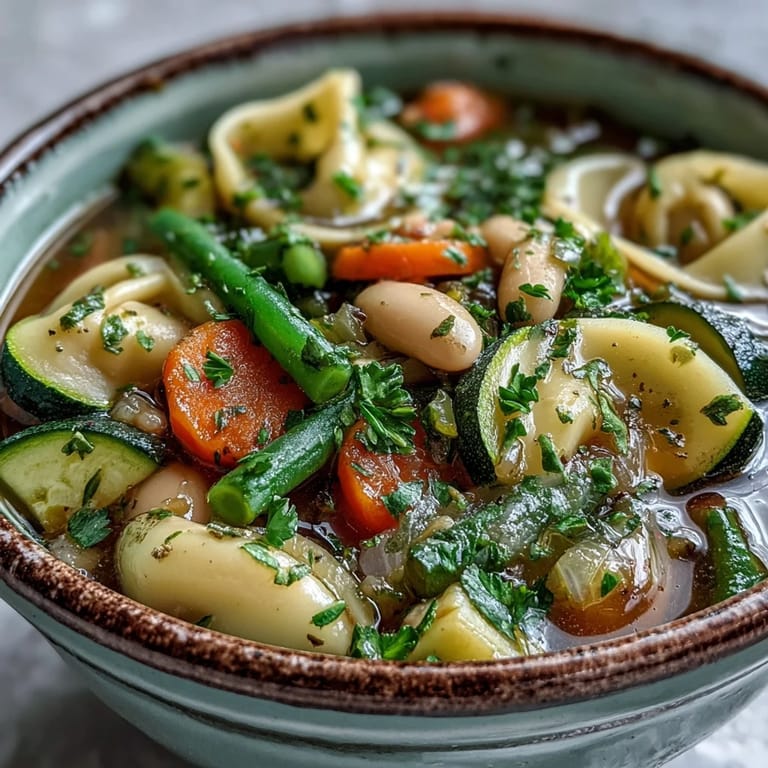
Save There's something about a pot of minestrone simmering on the stove that makes a kitchen feel like home, even if it's not yours. My neighbor handed me a ladle of hers one October afternoon, steam curling up between us, and I tasted what I'd been missing in all my cooking—not a single fancy technique, just good vegetables, patience, and the kind of soup that tastes different every time you make it. That's when I understood minestrone isn't really a recipe to follow; it's a conversation with whatever's in your garden or the market bin that day. Now I make it constantly, changing it with the seasons, and somehow it always feels like the right thing to eat.
I made this for my sister during a surprise visit, and she sat at my counter asking questions the whole time—not about technique, but about why I chose that particular zucchini, whether the pasta really needed to be so small. By the time we ate, she understood that minestrone is less about following orders and more about paying attention, which felt like the best thing I could teach her over a bowl of soup.
Ingredients
- Olive oil: Use a decent one, not the fancy stuff you're saving, just something that tastes like olives and makes you happy.
- Onion, carrots, celery: This trio is the foundation, and yes, you'll hear it called soffritto—just think of it as waking up the pot.
- Zucchini or butternut squash: Summer or winter, this vegetable decides the season of your soup; choose what's actually ripe.
- Green beans, kale, or spinach: The green keeps things bright and reminds you that vegetables aren't just filler in this soup.
- Garlic: Mince it fine so it disappears into the broth and you can't point to it but you know it's there.
- Canned diced tomatoes: Better than fresh tomatoes out of season; the tin knows what it's doing.
- Potato: Optional, but it softens the edge of the broth and makes the whole thing feel more filling.
- Vegetable broth: The quiet backbone of everything; taste it first because good broth matters more than the recipe says.
- Cannellini or borlotti beans: Drained and rinsed means they won't cloud the broth or overwhelm it.
- Small pasta: Ditalini or shells or elbows—nothing larger, or it gets lazy in the pot instead of melting into the soup.
- Bay leaf, oregano, basil: Dried herbs are your friends here; they hold flavor longer than you'd think.
- Fresh parsley: Stir it in at the end so it stays bright and tastes like green.
- Parmesan cheese: Optional but the rind trick is real—simmer it in the broth if you have one.
Tired of Takeout? 🥡
Get 10 meals you can make faster than delivery arrives. Seriously.
One email. No spam. Unsubscribe anytime.
Instructions
- Wake up the pot:
- Pour the olive oil into a large pot and let it shimmer over medium heat. Add the diced onion, carrots, and celery, and listen for that gentle sizzle—it means you're moving in the right direction. Stir occasionally for about five minutes until the vegetables soften and the kitchen starts to smell like something real is happening.
- Add color and texture:
- Stir in the minced garlic, diced zucchini or squash, and green beans or kale, cooking for just three minutes so the garlic doesn't burn and everything starts to get friendly. You'll notice the vegetables begin to release their own juices, which means they're giving themselves to the soup.
- Build the broth:
- Pour in the diced tomatoes (juice and all), add the diced potato if you're using it, and slip in the bay leaf. Give it two minutes to settle, then pour in all the vegetable broth at once—it should smell like something you want to eat for the next week. Bring it to a boil, then turn the heat down and let it simmer gently for fifteen minutes.
- Finish strong:
- Add the drained beans and pasta, and let them simmer uncovered for ten to twelve minutes until the pasta is tender and the beans have warmed through. Taste the broth now—this is when you season with oregano, basil, a pinch of salt, and pepper to your liking, and don't forget to fish out that bay leaf.
- The final touch:
- Stir in the fresh parsley right at the end so it keeps its brightness and color. Ladle it into bowls and finish with Parmesan if you're using it, or just a whisper of extra virgin olive oil if you're not.
 Save
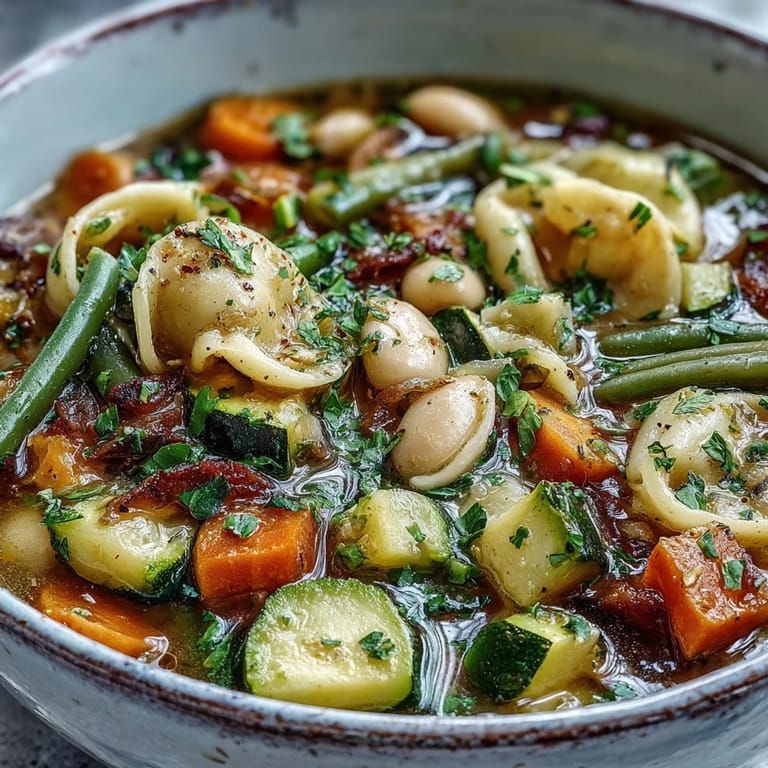
Save My mother once told me that minestrone was what Italians ate when they were tired of thinking about what to cook, and watching her make it without measuring anything taught me that the best cooking isn't about precision—it's about knowing your own kitchen and trusting it. That lesson has stuck with me longer than any single recipe ever could.
Seasonal Swaps That Actually Work
Spring is the time to throw in fresh peas, tender leeks, and young spinach; summer asks for zucchini, green beans, and fresh basil that you can tear with your fingers. Autumn brings butternut squash and kale, and winter is when you remember that cabbage exists and it's somehow perfect in soup. The magic isn't in following some seasonal calendar—it's in looking at what's actually in season where you live and trusting that it belongs in the pot.
The Parmesan Rind Secret
If you have a Parmesan rind hiding in your cheese drawer, this is its moment; drop it into the broth while it simmers and watch how it disappears into flavor. It never actually melts, so you have to fish it out before serving, but the invisible richness it adds is the kind of thing people taste and wonder about without knowing why it's so good. It's the oldest Italian trick, and it costs you nothing but the rind you were going to throw away anyway.
Why This Soup Gets Better With Leftovers
Minestrone is one of those rare dishes that's somehow better the next day, when all the flavors have gotten to know each other and the pasta has softened into the broth in the most delicious way. Reheat it gently on the stove (the microwave works but doesn't show it the respect it deserves), add a splash of broth if it's gotten thick, and serve it with bread that can actually soak up every spoonful. The reason it keeps improving is simple—you made something real, and real things only get better with time.
- Store it in an airtight container in the fridge for up to four days, and it'll thank you every time you open the lid.
- Freeze individual portions if you want soup waiting in the wings for a day when you don't feel like cooking.
- If it thickens too much after sitting, thin it with a little vegetable broth or water and taste it again—leftovers are forgiving like that.
 Save
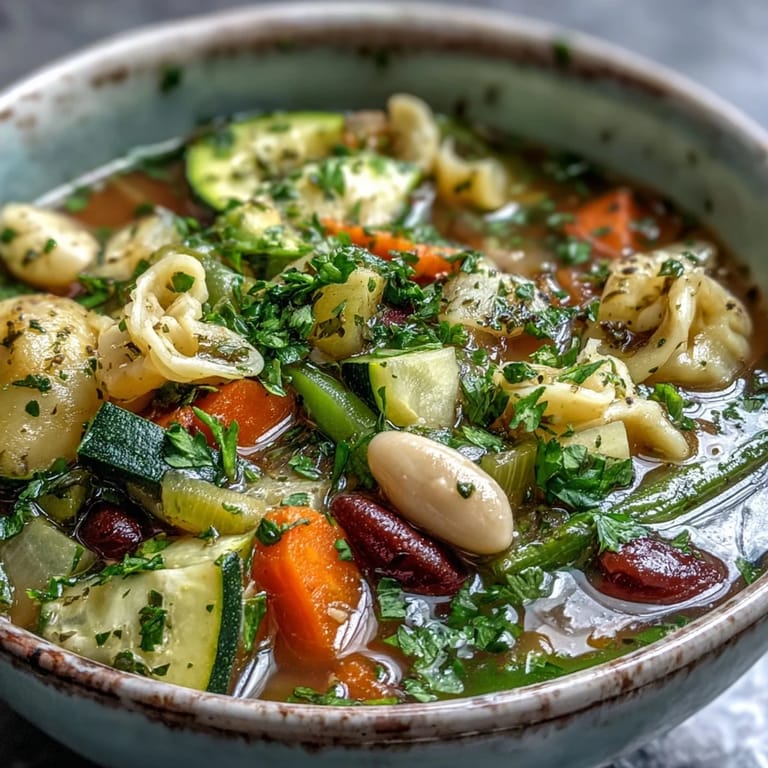
Save Make this soup whenever you need to remember that the best food is the kind that asks nothing but your attention and a pot. It'll warm you in ways that have nothing to do with temperature.
Recipe FAQ
- → What vegetables work best in minestrone?
Onions, carrots, celery, zucchini, green beans, and tomatoes form the classic base. For winter variations, substitute zucchini with butternut squash and green beans with kale or spinach. Spring additions might include peas, leeks, or fresh cabbage.
- → Can I make this minestrone gluten-free?
Absolutely. Simply replace the traditional pasta with gluten-free alternatives like ditalini, shells, or even rice. Double-check that your vegetable broth and all canned ingredients are certified gluten-free.
- → How do I prevent pasta from becoming mushy?
Add the pasta during the last 10-12 minutes of cooking and simmer uncovered. This prevents overcooking. For meal prep, consider storing pasta separately and adding it when reheating individual portions.
- → What makes minestrone vegan-friendly?
Omit the Parmesan cheese entirely or substitute with dairy-free alternatives. The soup remains flavorful with generous herbs, quality olive oil, and a Parmesan rind simmered in broth (removed before serving) for depth without dairy.
- → How long does minestrone keep in the refrigerator?
Stored in airtight containers, minestrone keeps well for 4-5 days. The flavors often deepen and improve after a day. Note that pasta will continue absorbing liquid, so you may need to add extra broth when reheating.